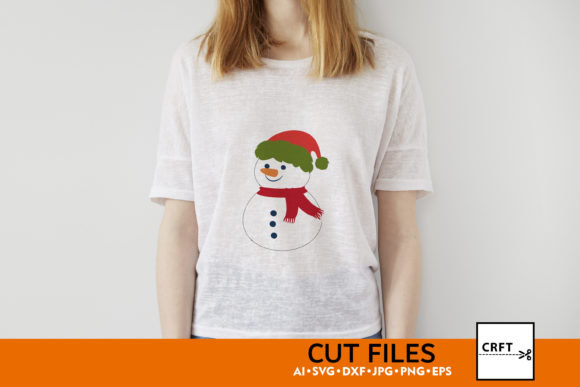
Sublimation SVG Files SNOWMAN Free Review
As a designer who has spent years navigating the intersection of digital assets and physical thread, I approach every new download with a critical eye. The market is flooded with Graphics that look stunning on a screen but fall apart when converted to a real-world application. Today, I am putting Sublimation SVG Files SNOWMAN Free through its paces. While the title explicitly mentions sublimation and cut files, my goal is to evaluate how this specific snowman design translates into the world of embroidery for those of us running craft businesses or creating personalized gifts.
First Impressions: Mood and Visual Personality
When I first opened the preview for Sublimation SVG Files SNOWMAN Free, the immediate vibe was playful and nostalgic. This isn't a hyper-realistic winter scene; it is a stylized, funny snowman character designed to bring a smile. For a holiday collection, this kind of visual personality is crucial. In the realm of Crafts, customers often buy the emotion behind the item just as much as the utility. This particular snowman has a whimsical layout that suggests it would work beautifully as a focal point rather than a subtle background element.
The shape is clean, which is promising for digitization. Complex, jagged edges often lead to registration issues in machine embroidery, where satin stitch borders can bleed or fill stitches can get lost. Here, the lines appear bold enough to maintain integrity even if the design is scaled down slightly. However, because this is originally marketed as an SVG cut file, I have to mentally map out how the vector paths will convert into a proper embroidery file. The transition from a flat graphic to a textured, stitched surface requires careful consideration of stitch density and underlay.
A Real-World Scenario: The Holiday Sweatshirt Project
To truly test the viability of Sublimation SVG Files SNOWMAN Free, let's imagine a specific project. Picture a small shop owner preparing for the Christmas rush. They want to create a line of custom sweatshirts featuring this funny snowman. The plan is to place the design on the left chest area of a heavy cotton blend crewneck. This is a classic use case for sweatshirt embroidery, but it comes with challenges.
If I were using this design for that sweatshirt, my first step would be to assess the hoop size. A left chest placement typically requires a 4x4 inch hoop. If the original SVG is too large, scaling it down might compress the details of the snowman's face or accessories. In embroidery, tiny lettering or intricate facial features often turn into muddy blobs if the thread colors are not spaced correctly. I would need to ensure that the eyes and mouth of the snowman remain distinct after digitizing. If the design relies heavily on fine lines, they might need to be thickened to accommodate the width of the needle and thread.
Furthermore, the texture of a sweatshirt is significant. Unlike a smooth tote bag, fleece or cotton blends have a nap. If the fill stitch density is too low, the fabric might show through, ruining the opacity of the snowman. Conversely, if the density is too high, the fabric could pucker, making the finished product feel stiff and uncomfortable. This is where practical judgment takes over. I would likely add a layer of tear-away stabilizer beneath the fabric to support the weight of the stitching without distorting the garment.
Navigating Fabric Challenges and Placement
While a sweatshirt is a great starting point, Sublimation SVG Files SNOWMAN Free must be versatile enough for other applications common in a craft business. Let's consider a few scenarios where caution is required:
- Textured Fabrics: If you attempt this design on a chunky knit blanket or a woven throw pillow cover, the uneven surface can cause skipped stitches. The needle might bounce, leading to broken threads or misaligned patterns. In these cases, the design needs to be simplified, perhaps removing some internal details to rely more on outline running stitch or broad satin stitch borders.
- Stretchy Materials: Using this snowman on a jersey t-shirt or a baby onesie introduces stretch. Without proper stabilization, the design can distort as soon as the garment is pulled. For baby embroidery, comfort is key, so the back of the design must lie flat against the skin.
- Dark Fabrics: Since this design is likely white or light-colored based on the "snowman" theme, placing it on dark navy or black apparel requires a backing layer. You cannot simply stitch white thread over black fabric and expect it to pop. A applique design technique or a toner transfer backing would be necessary to make the snowman visible.
- Curved Surfaces: Embroidering on a cap is notoriously difficult. The brim creates a curve that standard hoops struggle with. If the snowman design is tall and narrow, it might fit, but wide designs will warp. Always check the aspect ratio before attempting cap embroidery.
Commercial Viability and Brand Consistency
For the Etsy seller or the boutique owner, consistency is what builds trust. If you sell a tote bag with this snowman today, and another next month, the quality must match. Using Sublimation SVG Files SNOWMAN Free as a base for your brand means ensuring the final output looks professional every time. A messy stitch job can signal poor quality to a potential buyer, regardless of how cute the design is.
This is why testing is non-negotiable. Before committing to a batch of fifty items, I always recommend creating a printable mockup to visualize the scale, then stitching a sample on scrap fabric that matches your intended material. Check the color contrast. Does the red scarf of the snowman stand out against the blue shirt? Is the black coal button legible? These small details elevate a handmade product from a hobbyist project to a premium personalized gift.
Additionally, consider the longevity of the item. Holiday merchandise often gets washed frequently. High-density areas of stitching can sometimes crack or fray after multiple washes if the stitch density wasn't balanced during digitizing. Ensuring the design allows the fabric to breathe while maintaining structural integrity is part of the designer's responsibility.
Practical Designer Notes for Success
If you decide to integrate Sublimation SVG Files SNOWMAN Free into your workflow, keep these actionable tips in mind:
- Verify Licensing: Even though the title says "Free," always double-check the license terms. Can you sell the finished embroidered products? Are there restrictions on the number of items you can produce? Understanding the commercial rights is vital for any digital product seller.
- Test Digitization: Do not assume the SVG converts perfectly. Use your embroidery software to trace the vectors and adjust the stitch types manually. You may need to change a fill stitch to a satin stitch for better definition on small elements.
- Color Palette Strategy: Limit the number of thread colors to reduce waste and production time. A three-color version of the snowman might be just as effective as a six-color version, especially for quick-turnaround orders.
- Stabilizer Selection: Match your stabilizer to the fabric. Cut-away for knits, tear-away for wovens. Never skip this step, as it is the foundation of a successful embroidery project.
- Mockup Validation: Create both light and dark background mockups to see how the design performs in different contexts. This helps in marketing your small shop product effectively online.
In conclusion, Sublimation SVG Files SNOWMAN Free offers a charming aesthetic that fits well within the holiday season. However, its success in the physical world depends entirely on how thoughtfully you adapt it for embroidery. By respecting the limitations of fabric, understanding stitch mechanics, and prioritizing quality control, you can transform this digital asset into a beloved finished product that customers will cherish for years to come. Whether it ends up on a cozy blanket, a festive apron, or a trendy tote bag, the care you put into the execution is what truly defines the value of your craft.