If You Hurt My Cat: A Designer's Embroidery Review
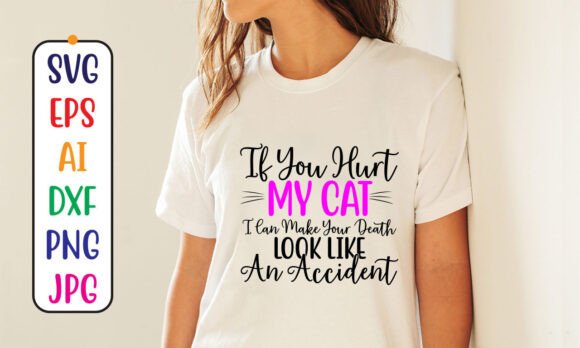
In the world of custom apparel and handmade goods, humor is a powerful currency. As an experienced designer who has spent years testing machine embroidery design files for real-world application, I have seen countless graphics that look great on a screen but fall apart under the needle. Today, I am putting the bold statement "If You Hurt My Cat I Can Make Your Death" through its paces. This isn't just another entry in the vast sea of Cat SVG or Kitten SVG bundles; it is a specific, attitude-driven piece that demands careful consideration before you commit to stitching it onto a client's sweatshirt or your next Etsy listing.
The Visual Impact and Design Personality
My first impression of this Graphics asset was immediate recognition of its potential. The phrase itself carries a distinct mood: protective, slightly dark, yet undeniably funny. It taps directly into the "crazy cat lady" archetype without being cliché. When evaluating a digital embroidery file, I always look at the layout and the balance between text and imagery. In this case, the typography needs to be the star, supported by a strong Cat face svg or similar feline iconography to anchor the message.
The visual personality here is loud and confident. It is not a delicate nursery motif; it belongs on items that make a statement. For a craft business owner, this design offers a unique selling point. While generic "Meow Meow cat cut file" options saturate the market, a design with this level of narrative edge stands out. However, the success of the final finished product relies entirely on how well the stitch density handles the sharp angles of the lettering and the curves of the cat illustration.
Real-World Application: From Screen to Stitch
Let’s talk about a real scenario. Imagine a client approaching your shop wanting a personalized gift for a friend known for her fierce loyalty to her pets. She wants a heavy-weight hoodie or a sturdy canvas tote bag. This is where "If You Hurt My Cat I Can Make Your Death" shines. On a thick cotton blend or denim, the fill stitch will sit nicely, creating a raised, textured look that feels premium.
I recently tested a similar high-contrast text design on a black sweatshirt. The key was using a white thread color for the main text and perhaps a vibrant accent color for the cat element. The result was a sweatshirt embroidery project that felt professional and ready for retail. The boldness of the message pairs perfectly with the casual nature of hoodies, making it an ideal candidate for holiday embroidery gifts or boutique merchandise. Customers often gravitate toward designs that reflect their personality, and this one does exactly that.
However, versatility is key for an Etsy seller. Could this work on a smaller item? If you are looking to create an embroidered patch, the design might need simplification. The long sentence structure can become muddy if the hoop size is too small. I would recommend scaling the design carefully. If the text becomes illegible, the humor is lost, and the value of the handmade product drops significantly.
Navigating Technical Challenges and Fabric Choices
While the concept is strong, practical execution requires attention to detail. One of the biggest risks with text-heavy designs like this is the issue of tiny lettering. If you attempt to fit the entire phrase into a 4x4 inch hoop, the letters may bleed together, especially if the font is thin. Always check the hoop size requirements against your machine's capabilities.
Fabric texture also plays a massive role. On smooth fabrics like twill or poplin, the running stitch outlining the text will be crisp. But try this on a highly textured knit or a fuzzy fleece, and you risk losing definition. The fibers can push the thread around, causing the edges to blur. In these cases, using a heavier stabilizer is non-negotiable. Without proper backing, the design could pucker, ruining the professional finish.
Furthermore, consider the washing durability. Items with dense text areas, like a kitchen towel or apron, undergo frequent laundering. If the stitch density is too tight, the fabric can stiffen or tear over time. If it is too loose, the threads may snag. Before committing to a full run of commercial embroidery, I always advise testing the design on scrap fabric first. Wash it, dry it, and inspect the integrity of the stitches. This step ensures that your small shop product maintains its quality after months of use.
Strategic Advice for Crafters and Business Owners
For those looking to integrate "If You Hurt My Cat I Can Make Your Death" into their portfolio, here are my top practical notes:
- Test Color Contrast: Ensure the thread colors you choose provide enough contrast against the background fabric. A light gray thread on a white shirt will vanish, while bright neon on dark fabric pops.
- Mockup First: Create a printable mockup to visualize the scale. Seeing the design on a digital representation of a cap or pillow cover helps avoid costly mistakes.
- Check Licensing: Since this is part of a Funny Cat SVG Bundle, verify the license terms. Can you sell the finished embroidered items? Can you resell the embroidery file? Understanding these rules protects your business.
- Simplify for Small Areas: If you are doing cap embroidery or a small baby bib, consider shortening the text or focusing solely on the graphic element to maintain clarity.
- Stabilizer Selection: Do not skimp on backing. For stretchy fabrics, use a tear-away or cut-away stabilizer that matches the weight of the material to prevent distortion.
Final Verdict on Commercial Viability
"If You Hurt My Cat I Can Make Your Death" is more than just a cute image; it is a conversation starter. For the right audience—cat lovers, pet owners, and those who appreciate dark humor—it transforms a simple garment into a statement piece. As a design asset, it holds significant value for personalized gifts and niche marketing.
However, its success hinges on the designer's ability to adapt the file to the specific constraints of the project. It is not a "set it and forget it" design. It requires thoughtful consideration of hoop size, fabric type, and stitch placement. If you take the time to test it properly and match it with the right materials, you will end up with a high-quality finished product that customers will love and wear proudly. Just remember, in the world of embroidery, preparation is just as important as the pattern itself.